
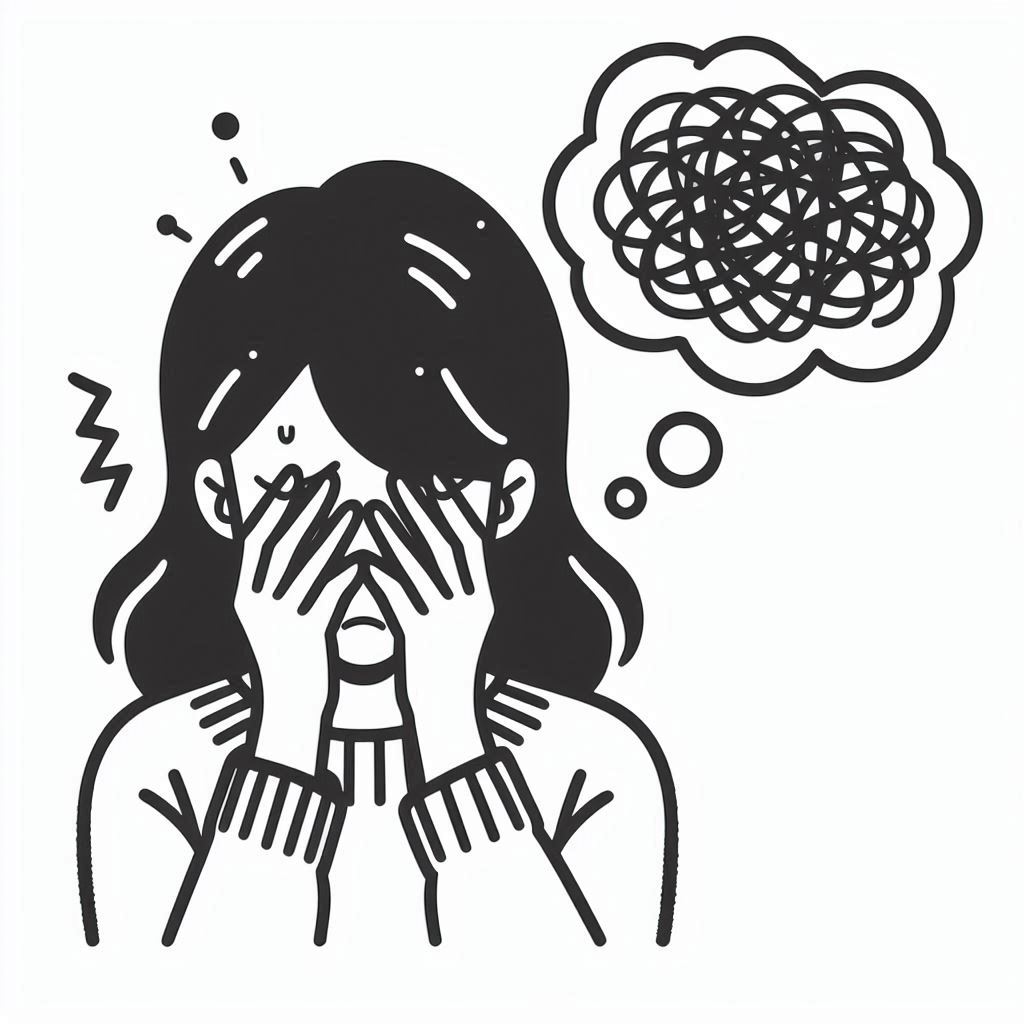
Have you ever met someone who seems to always assume the worst, with a cup-half-empty kind of mentality? You might notice it in yourself, when you lie in bed at night thinking about all the ways something could go wrong, or panicking about how your boss is for sure going to fire you. Well, there is a reason our brains get caught in these negative patterns. The short answer is: it’s a shortcut. The fancier answer is that our brains sometimes has thoughts we call cognitive distortions, which are unrealistic or flawed and cause us to see the world through a partciularly negative lens.
Why Does Our Brain Take Shortcuts?
When you think about it, our brains receive a ridiculous amount of information all the time. Physical sensations, noises, smells, taste, people talking to us, thoughts we are having, memories that come up, problems to solve – the list goes on! It is understandable that our brain will be choosey about what information it pays attention to and what information it skips.
For example, how much attention have you been paying to your feet as you read this? Can you feel the soles of your foot? Do you notice what they’re touching (socks? Shoes? Floor? The temperature of the air around them?). Chances are that you notice it now, whereas before it had been tuned out. We might only tune back in when there’s an unexpected or painful sensation (or when we get the idea of there being a monster under the bed, waiting to grab out feet. Thanks, brain.)
Our brain is focused on keeping us safe, so it tends to notice and remember negative (dangerous) information over positive (safe) information. It’s more important to our survival for us to notice a venomous snake in the grass than it is to notice a pretty flower. However, not all snakes are venomous (and some “snakes” turn out to be lizards, or sticks, or hoses!). So how does our brain decide which to pay attention to? Well, it certainly doesn’t wait to figure it out. Instead it uses a shortcut – assume the long skinny thing in the grass is dangerous, get to safety, then reassess. (Side note: Our survival brain is wired to react much quicker than our critical thinking brain, so this also plays a role here).
Another way to view these shortcuts are as filters we use to view the world. If we generally believe that we are always at fault, then we are more likely interpret our partner not doing the dishes as proof they are angry with us rather than assuming they forgot.
Examples of Cognitive Distortions
Our brains do this for all kinds of situations, not just ones involving reptiles (or dishes). Below is a list of some common cognitive distortions:
- All-or-Nothing (black & white thinking)
- With this distortion we don’t see the grey – things are either good, or bad. I either performed perfectly, or I failed. My partner loves me, or they hate me.
- Overgeneralisation
- This distortion involves taking one/a few pieces of evidence and viewing them as a pattern. Someone forgetting to CC you into an email at work turns into “They always exclude me”. A student who fails a test may think things like “I never do well, I always fail”.
- Minimising/Disqualifying the Positive
- Minimising the positive means we downplay/ignore the positive things in favour of the negative. Say we go out to dinner and everything went well, except we had to wait 10 minutes to be seated. Minimising the positive may mean we hyperfocus/dwell on the wait time, not really thinking about the time we spent with our friends or how good the food was.
- Disqualifying the positive means we find ways to “explain away” the good things. Manager gave me good feedback? They only did that because they felt bad about how poorly I’m doing. Friends said I look good in those jeans? They have to say that, they’re my friends. Passed my exam? Only because I had help studying, if I did it alone I would have failed.
- Catastrophising
- This is the one I assume most people are familiar with. Catastrophising means we go to the worst possible outcomes. An old story used to go around the school playground each exam period that talked about how forgetting to bring your pencil to the exam would result in you missing the test, failing school, becoming unemployable, then homeless, and finally dying alone. Dramatic? Yes, but also a great example of catastrophising.
- Jumping to conclusions
- Mind reading – With this subset of jumping to conclusions, our brain is sure that we can read someone’s mind. “They thought I was so awkward in that conversations, they won’t want to speak to me again”
- Fortune telling – With this distortion, we believe we know what is going to happen with little to no real-world evidence backing our theory up. For example, believing we will never find a partner and end up alone.
- Emotional reasoning
- This means we take our emotions as gospel and automatically believe whatever they are telling us. For example, if I feel hurt by something my partner said, then I believe my partner intended to hurt me. Or, if I felt awkward during a conversation, that must mean I am awkward, or that everyone felt awkward. Something I often say to clients is that emotions are valid, but they don’t hold up in court – You aren’t getting away with speeding because it didn’t feel like you were speeding!
- “Should” statements
- Also see statements including the words “Must”, “Have to”, etc. These statements apply a lot of pressure and, when held onto too tightly, can lead to feelings of failure and guilt. (Instead, you can try replacing the “should” with “need to” or “want to”. Do you need to go to the gym, for your health or mood? Do you want to go to the gym?).
- Personalisation
- This means that we incorrectly apply negative things to ourselves – including believing it is our fault when things go wrong, or that we are responsible for any negative change in mood in the people around us.
- Control Fallacy
- This is the belief that we have absolutely no control (are completely helpless/powerless), or that we have full control (and therefore complete responsibility) over the world around us.
- Fairness Fallacy
- This is the belief that the world operates in a way that is inherently fair. This leads to feelings of hopelessness, resentment, or a difficulty tolerating, situations that are not fair.
- Heaven’s Reward Fallacy
- This is the belief that your suffering, struggles, etc. will eventually “pay off” or be proportionally rewarded. Unfortunately, sometimes we won’t achieve what we are hoping for regardless of what we sacrificed to get there.
How To Manage Cognitive Distortions?
Once you notice the kinds of cognitive distortions your brain likes to use the goal is to challenge these ideas and offer up more realistic, reasonable explanations. Note I said realistic and reasonable, not simply positive. Sometimes the explanation is negative, sometimes the conclusion we jumped to does turn out to be right. The issue here is the working out – we want to help our brain objectively consider the evidence and come up with a more appropriate thought. One way to do this is to write down the thought you’ve noticed and then list out all the evidence that supports this thought (note: Emotions, feelings, and vibes, are not evidence!). Once that’s done, make a second list that includes all the evidence against this thought. It might look something like this:
Thought: “I am going to be fired”
Evidence FOR:
- My manager has asked for a meeting
- I made a mistake on my last report
Evidence AGAINST:
- I haven’t been given any performance reviews/formal warnings, which need to happen before being fired
- I’m not aware of any other big mistakes I’ve made
- Generally, my manager has given positive feedback to my work
- The manager hasn’t fired anyone since I started working here
It doesn’t seem realistic anymore to think “I am going to be fired”. Alternatively, we might think “It seems unlikely I am being fired, and I don’t have any information about why this meeting is happening”.
Now you can think about asking your manager for more information on meeting agenda, or you can wait and see how things go (whilst reassuring yourself that it seems unlikely to be about your termination).
In therapy we often dig a little deeper and look at where that distortion is stemming from so we can shift those underlying beliefs about the world/yourself/others. Maybe you think you’re getting fired because deep down you believe you are a failure, so you spend your time at work feeling like an imposter who could be caught out at any moment. We need to challenge those beliefs, otherwise the distorted thoughts will keep popping up.
I hope this has been helpful for you. If you feel you are struggling with the impact cognitive distortions are having on your life, I encourage you to reach out to your care team for support to explore whether therapy may be the right option for you.
Our Services
Collaborative
Only you are the expert in your own life! I take the time to explore and understand the problems you're facing, so that we can uncover insights and develop strategies that are individually tailored to you.
Human First
I encourage you to come as you are to sessions, whether that’s cracking jokes, sitting on the floor, or swearing like a sailor (as long as you don’t mind a little of the same from me!). I want therapy to feel like a safe space where you can present in a way that feels most natural to you.
Being human also means that sometimes things happen that mess up our plans. If you can’t make an appointment or need to swap between face-to-face and telehealth, I will do my best to find a solution that works for you.
Modality
The way therapy looks will depend on your situation and needs. We will discuss this early on to make sure you are comfortable with how we progress.
I typically work using a type of therapy called “Schema Therapy”. This combines elements of cognitive-behavioural therapy, attachment theory, and psychoanalysis. We will focus on different parts of the self (think: the part of you that wants to sleep in, and the part that knows they need to get up!) in order to help resolve deeply ingrained patterns of thinking and feeling.